



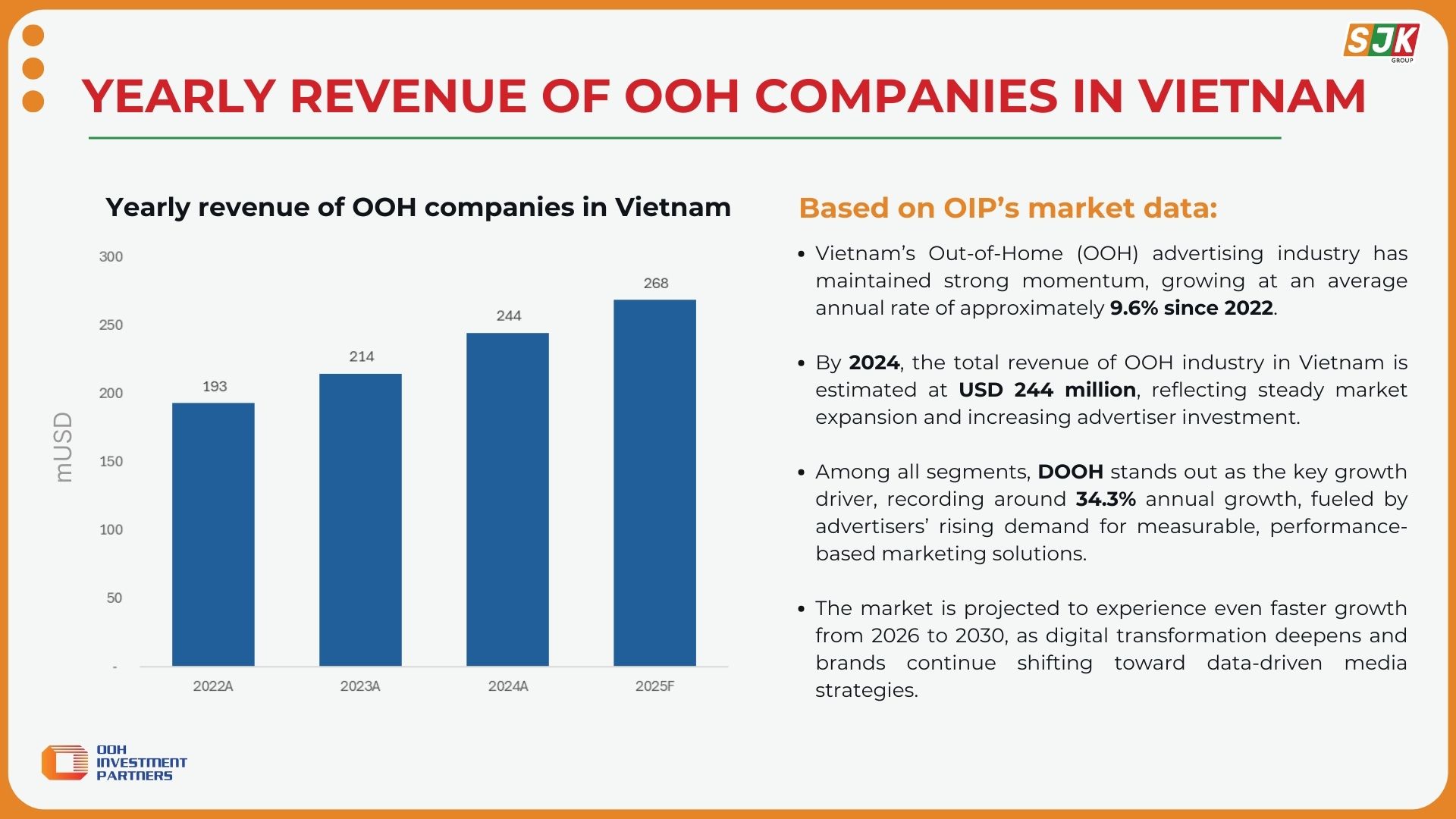
Vietnam’s Out-of-Home (OOH) advertising market is entering a new growth phase. According to OIP, OOH spending is expected to rise 8-10% annually, with the digital screen (DOOH) segment forecast to expand the fastest thanks to rapid urbanisation and high traffic density in Hanoi and Ho Chi Minh City.
Regional investment funds, particularly those from Singapore and Hong Kong, are showing increrasing interest. However, most domestic OOH companies face difficulties when entering international fundraising rounds due to three major challenges: lack of data, lack of regulatory and financial standardisation, and slow digital transformation.
Below are the issues considered to have the highest impact on investor confidence.
Financial and Legal Transparency Not Yet at International Standards
Unlike industries with centralised assets, OOH companies manage highly fragmented assets across numerous locations. This requires handling hundreds of site-rental contracts and advertising permits.
The lacks of legal and financial standardisation often prolongs the due-diligence process to 1.5 – 2 times longer than usual.
During the diligence, investors require full documentation for every individual billboard or screen. Just one inaccurate or inconsistent document significantly increases the perceived risk. This has caused many deals to be paused or valuation negotiations to restart.
To improve this, OIP recommends that companies, allocate 1 – 2 months to re-audit their data, establish standardised financial reports, and connect these figures with internal operational data to enhance transparency and clarify. This helps strengthen investor confidence in the company’s capabilities.
Slow Digital Transformation While the Region Accelerates
Vietnam’s OOH sector still relies heavily on traditional static billboards. Meanwhile, neighboring markets have achieved high digitalisation rates: Singapore’s DOOH accounts for nearly 70% of total OOH spending (Magna Global 2024); Thailand reaches 42%; and Indonesia records DOOH growth of 18% annually.
In Vietnam, the proportion remains significantly lower. Many major roads have LED screens, but measurement standards are lacking and content management is not centralised.
International investors prioritise digital assets because they are easier to scale, easier to standardise, and can integrate real-time data.
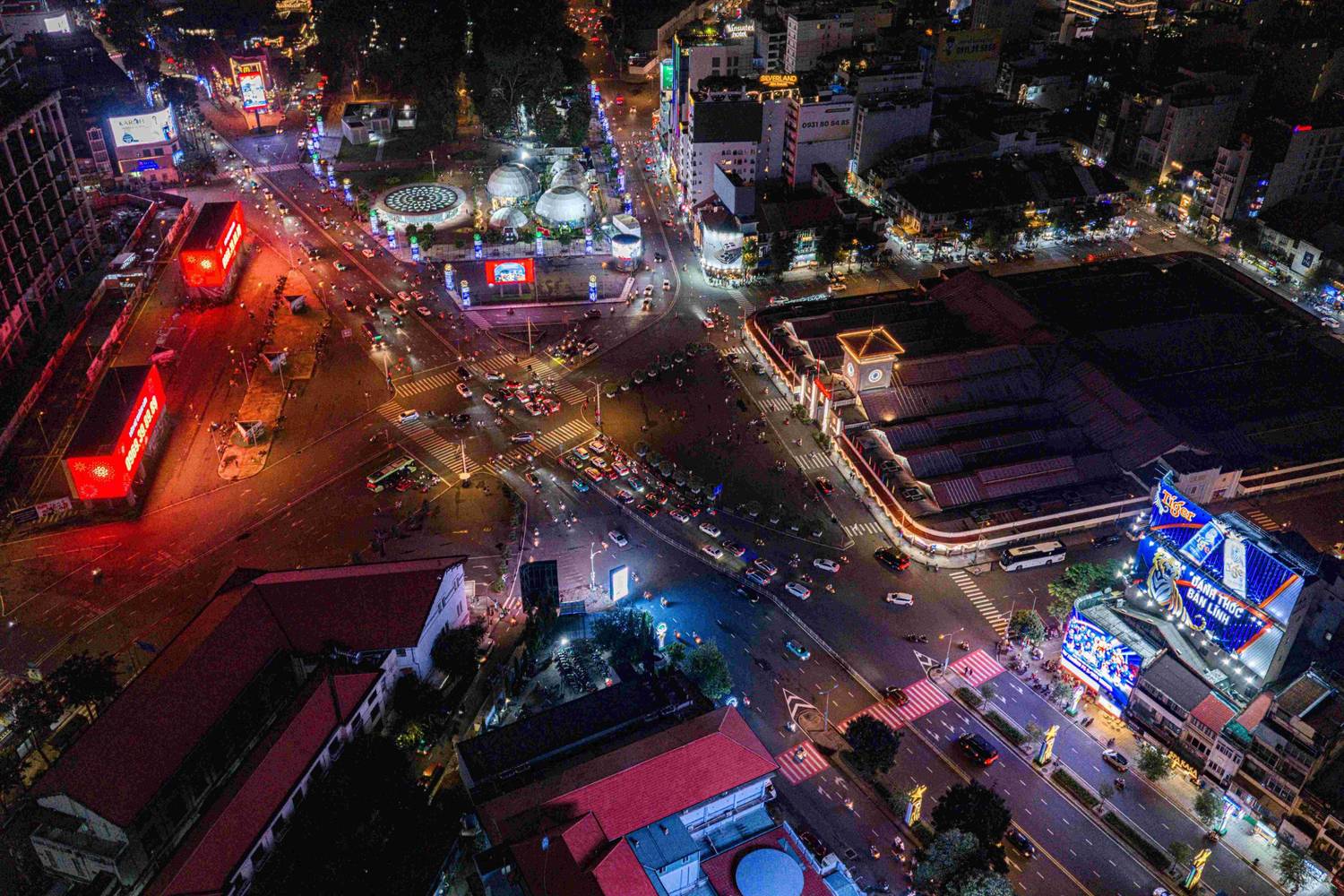
The slow pace of digital transformation makes it difficult for companies to demonstrate scalability and long-term profit margins.
Facing a future of significant opportunities, especially for companies with strong financial capacity, digital transformation is inevitable. To ensure the most efficient use of capital, businesses need to thoroughly research available core technologies and choose the approach that offers the best strategic advantage.
Impact of Limited Transparency and Delayed Digitalization
Lower-than-expected valuations: due to insufficient data and fragmented legal documentation, investors apply higher risk adjustments. Many companies report receiving valuations 20–40% below expectations.
Longer due-diligence timelines: in developed markets, OOH due diligence typically lasts 6–10 weeks. In Vietnam, some deals extend to 3–6 months due to the need to verify legal documents for each location and request additional audits.
Missed access to major funds: investors from Singapore, Hong Kong, and Japan prioritize companies with strong governance, comprehensive measurement data, and clear expansion plans. Without meeting these standards, businesses miss out on funds that can provide both capital and strategic value.
Report by Team OIP: Tuan Anh – Nhu Phu (Vicky)